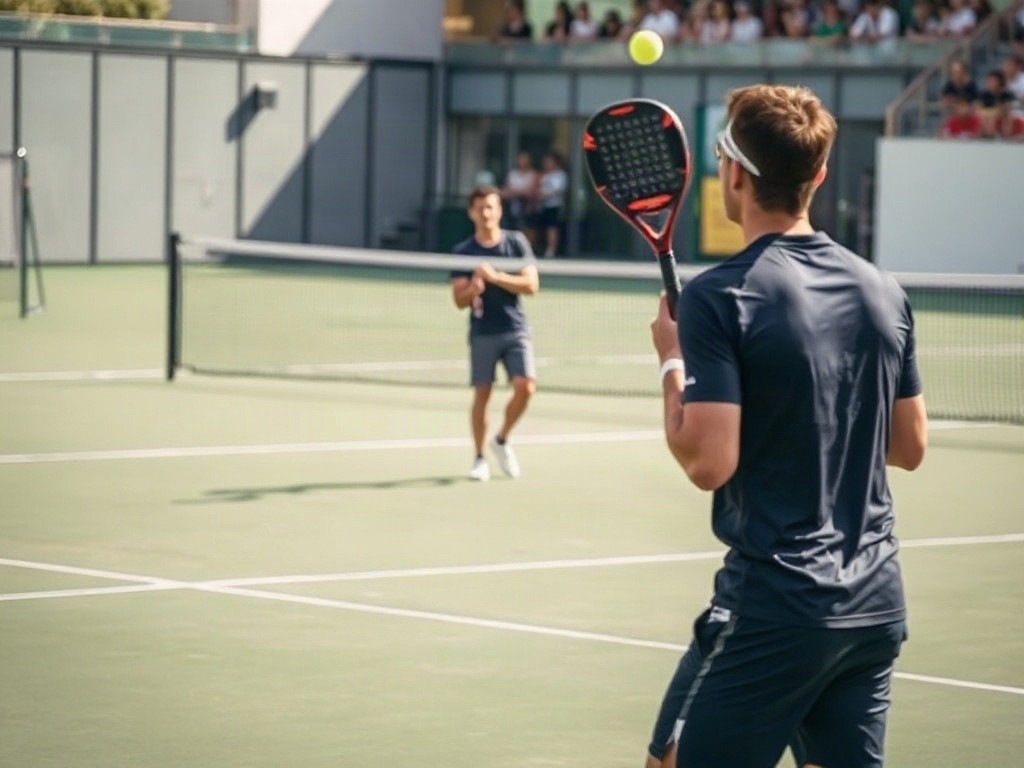

Few opponents change the emotional temperature of a padel match as quickly as a lobber. One moment you are controlling the net and dictating angles, and the next you are scrambling backward, trying to recover balance before the next ball arrives. Against this type of player, raw power matters less than discipline, spacing, and decision-making under pressure. The key is not simply to survive the lob, but to turn it into a predictable pattern you can read and punish. When you understand where to stand, when to move, and which reply gives you the highest percentage, the lobber’s greatest weapon starts working against them. PLAYAGAINSTLOBBERS becomes less about panic and more about structure.
Many players think lobbers are only a nuisance because they delay the point, but in reality they often expose weaknesses in court management. They force rushed footwork, awkward overheads, and poor communication between partners. If you react with frustration, you end up giving them exactly what they want: rushed mistakes and weak returns. If you respond with calm spacing and intentional shot selection, their lobs become a chance to reset the rally on your terms. This article breaks down how to position yourself, how to choose the right shot after defending a lob, and how to make the whole point feel less chaotic. The goal is not to chase every ball with aggression, but to make every response look planned.
Understanding Lobbers and Why They Disrupt Your Game

Lobbers rely on timing, patience, and your willingness to overreact. They are often not trying to hit outright winners from the baseline, because they understand that padel rewards pressure and positioning more than brute force. Instead, they use the lob to push you out of the net zone, slow down your attack, and create defensive transitions where you are least comfortable. A good lobber makes you hit from awkward body positions and forces your partner to decide too late. That disruption is not accidental; it is the strategy. Once you see the lob as a pattern rather than a random shot, it becomes easier to dismantle.
Common Traits of Effective Lobbers
Effective lobbers usually share a few habits that make their game annoying and efficient. They are often patient enough to wait for a shorter ball before lifting it high and deep. They tend to read your body language, especially when you lean too far forward at the net or shift your weight aggressively toward the volley. Many of them also target the space between partners, because that area creates hesitation and confusion. You may notice that their lobs are not always spectacular, but they are consistently placed in difficult zones. That consistency is what makes them dangerous.
How Lobbers Change Court Dynamics
Once lob-heavy opponents settle into a rhythm, the geometry of the court changes. Your usual attacking position at the net becomes less secure, and your partner’s recovery steps become more important than your instincts to attack. The match can start to feel slower, but in a deceptive way, because you are forced into sudden bursts of backward movement. If you do not adjust your spacing, you end up defending from poor balance and making rushed overheads. The smartest response is to accept that the court is temporarily bigger and that your positioning must adapt to that reality. That shift in mindset is often the first step toward regaining control.
Optimal Positioning When Facing Frequent Lobs

Positioning against lobbers is less about standing in one perfect place and more about reading the situation ball by ball. Your ideal location changes depending on whether the opponent is under pressure, how deep the incoming ball is, and whether your partner is already covering space behind you. If you stand too close to the net, you leave yourself exposed to balls over your head. If you stand too deep, you surrender the offensive advantage that makes padel so effective. The best position is usually a controlled middle ground that gives you room to move forward or back without losing balance. That is why footwork and anticipation matter as much as the shot itself.
- Stand far enough back to react to a high lob, but not so far that you abandon the net completely.
- Keep your knees bent and your racket prepared above chest height for faster first movement.
- Adjust your spacing based on the opponent’s shoulder and racket preparation, not just the ball already leaving the racket.
- Hold a compact posture so you can move forward again after the overhead or defensive reply.
Net Position Adjustments
Small adjustments at the net make a major difference when the lob is a regular threat. If the opponents are deep behind the baseline, you can often hold a slightly more aggressive line because their lob has less margin and less disguise. If they are close to the fence or hitting from a stable base, give yourself a step more space so the ball does not sail over your head. Your goal is to invite the lob only when you are prepared to take it early or attack it with balance. This is not passive play, because the adjustment itself is a form of pressure. You are showing the lobber that you have already solved part of their puzzle.
Managing Distance From the Back Glass
When you are forced back, your relationship with the back glass becomes critical. Many players panic and move too close to it too quickly, which makes reading the rebound harder and limits their escape routes. Others drift too far forward and lose time on high, deep lobs that need to be taken earlier. The best habit is to move in a controlled way and keep your eyes on the arc rather than the bounce alone. If you prepare early, you can decide whether to let the ball come off the glass or take it before that happens. In either case, your spacing should help you stay balanced enough to produce a quality reply.
Shot Selection After Defending a Lob
Defending a lob is only half the job, because the next shot often decides whether you reset the point or hand the initiative back. A rushed response can leave you and your partner vulnerable all over again, while a calm and precise choice can immediately reduce pressure. The best shot depends on your contact point, your balance, and the opponents’ court position at the moment you recover. Sometimes the correct play is a controlled overhead that keeps you at the net. Sometimes it is a high defensive ball that buys time. What matters most is that the shot serves the point you are in, not the point you wish you were in.
| Situation | Best Reply | Why It Works |
|---|---|---|
| Ball is high and you are balanced | Controlled overhead | Lets you stay aggressive without forcing a low-percentage winner |
| Ball is deep and you are off-balance | Safe reset shot | Buys time and avoids giving away the point |
| Opponents are still recovering | Placement shot to open space | Targets gaps instead of power, making recovery harder |
| Return lane is blocked | Lob of your own | Reverses pressure and can force the lobber to defend |
The table above shows that shot selection is not about one favorite option but about matching the reply to the moment. A controlled overhead is often better than a full-power smash because it keeps you inside the rally and reduces errors. A reset shot can look conservative, but it can also restore structure and invite a better attacking ball later. If the opponents are out of position, placement often beats power by a wide margin. Even a simple deep ball to the right side can shift the balance of the entire point. The smartest players understand that effective shot selection is really a form of tactical patience.
- Choose control over force when your body is not fully set.
- Aim for depth and angle when the opponents are stretched wide.
- Use a lob back only when it truly helps you regain time and position.
- Avoid emotional shots that come from frustration rather than structure.
Controlled Overheads vs Aggressive Smashes
Not every overhead should be treated as a finishing opportunity. A controlled overhead keeps the ball low enough to pressure the opponents while also preserving your own recovery path to the net. An aggressive smash can win points, but it can also turn into a gift if the angle is poor or if the ball sits up less than expected. Against skilled lobbers, the smartest overhead is often the one that solves the rally instead of trying to end it too early. You should think about recovery first, placement second, and power third. That order prevents the kind of overhitting that gives away momentum.
When to Use a Lob of Your Own
A defensive lob can be one of the most effective answers when the opponents are crowding the net or when your contact point is uncomfortable. It is not a sign of weakness if the ball is played high with purpose, because the shot can reset space and force the other team to defend. The key is to make your lob deep and well-measured rather than floating it into an easy overhead. A quality lob of your own can also interrupt the rhythm of a player who is expecting to keep you pinned back. If they become too aggressive at the net, a well-timed lob can flip the emotional burden back onto them. In that sense, your lob is not just a defensive tool; it is a tactical reset.
Partner Communication and Court Coverage
Against lobbers, good communication is almost as important as footwork. One player may read the ball early, but the point only stays organized if both partners respond to the same information. A call made late can create hesitation, and hesitation creates the open spaces that lobbers love to exploit. You should communicate not only about who takes the ball but also about who covers the middle, who stays ready for the rebound, and who is prepared to step in after the overhead. Simple, consistent cues work better than long explanations during a rally. The more coordinated you appear, the fewer easy lobs the opponents will believe they have available.
- Call the ball early so your partner can move without guessing.
- Use clear, short words instead of long phrases during live points.
- Recover together after each lob so the court shape remains compact.
- Decide in advance who takes middle balls and who covers the backhand side.
Coverage also depends on how well you transition after the lob has been handled. If one player moves back to defend, the other should understand how to protect the net and close the middle. If both players chase the same ball, the court opens up instantly. If both players retreat too far, the opponents gain the net with very little effort. The best teams look calm because their movement has already been discussed before the point begins. That shared understanding makes the lobber’s job much harder, because uncertainty disappears from the equation. In a game built on angles and timing, certainty is a powerful defensive weapon.
Tactical Patterns to Punish Lobbers
Lobbers often repeat patterns that can be exploited once you notice them. Some lob from the same side under pressure. Others only lob when you lean too far into the court or when their partner is stretched. If you identify these habits, you can start forcing the lobber into less comfortable situations and reducing the quality of their options. The aim is not to chase a highlight-reel winner on every point, but to make their preferred pattern feel less reliable. When they start doubting their own timing, your job becomes easier. At that point, the lobber is no longer dictating the match.
One of the best ways to punish a lobber is to attack the ball that comes before the lob. If their return is short, slow, or predictable, step in and take time away from them. A deeper, heavier reply forces them to hit the lob from a less stable position, which reduces both disguise and accuracy. This is especially effective if you can keep them moving side to side before they even have a chance to settle. Weak returns create weak lobs, and weak lobs are much easier to manage. The more pressure you create early in the point, the fewer comfortable defensive options they will have later.
- Target their feet with deep returns to limit balance and preparation.
- Use angled volleys to pull them away from the center and shrink their lob window.
- Vary pace so they cannot time your approach to the net.
- Make them hit on the move whenever possible, especially on the backhand side.
Another useful tactic is to force lobbers to defend from positions they do not prefer. If you keep sending low, awkward balls into the corners, they must improvise more often and lose the clean setup they need for a good lob. You can also vary your own positioning so they cannot predict whether you will poach, hold, or retreat. This uncertainty makes their best weapon less trustworthy. Eventually, the lobber starts to feel that every high ball is earned under pressure rather than delivered as a comfortable default. That is exactly the kind of discomfort you want to create.
Common Mistakes to Avoid
Players often make the same errors against lobbers because they focus too much on the lob itself and not enough on the full rally. Standing too close to the net is one of the most common mistakes, because it removes reaction time and encourages desperate overheads. Another error is trying to end every point immediately after defending a lob, which usually produces unforced mistakes. Some players also stop communicating once the ball goes up, even though that is the moment when coordination matters most. If you can avoid these habits, you will already be ahead of many opponents. In padel, avoiding damage is often the fastest path to turning defense into attack.
- Do not stand frozen after your first movement; recover immediately after the shot.
- Do not swing for winners when a controlled reply is enough.
- Do not assume your partner is covering space unless you have spoken clearly.
- Do not let frustration influence your next decision.
Another subtle mistake is watching the lob travel without preparing your feet early enough. The earlier you read the trajectory, the more likely you are to choose a solid reply instead of a desperate one. Some players also forget that body language can encourage lobbers to keep repeating the same tactic. If you appear rushed, unstable, or annoyed, they gain confidence. If you stay compact and organized, they are forced to hit better balls to get the same result. That mental pressure can be just as valuable as any technical adjustment.
Итог
Playing against lobbers in padel is not a test of power as much as it is a test of discipline. The players who handle them best are usually the ones who stay patient, move intelligently, and choose the right shot for the right moment. Good positioning protects you from being dragged into constant defense, while smart shot selection ensures that each recovery has a purpose. Clear communication with your partner turns a stressful pattern into a manageable one. Most of all, remember that a lobber’s strategy depends on your impatience more than on their brilliance. Once you remove that impatience, the match becomes far easier to control.
Часто задаваемые вопросы
- How should I position myself against lobbers in padel?
Stay alert near the net, but leave enough space to react to balls over your head. Adjust your depth based on the opponent’s balance, court position, and the quality of the incoming ball. - What is the best shot after defending a lob?
The best reply is usually the one that restores balance and control, such as a controlled overhead, a deep reset, or a well-placed lob back when you need more time. - Should I smash every lob in padel?
No. Smashing every lob is often risky and unnecessary. A controlled overhead or placement shot is frequently the better option because it reduces errors and keeps you in the rally. - How can I reduce the effectiveness of lobbers?
Keep your positioning compact, communicate early with your partner, and make them defend under pressure. If you force them to hit lobs from awkward positions, their strategy becomes much less effective.