
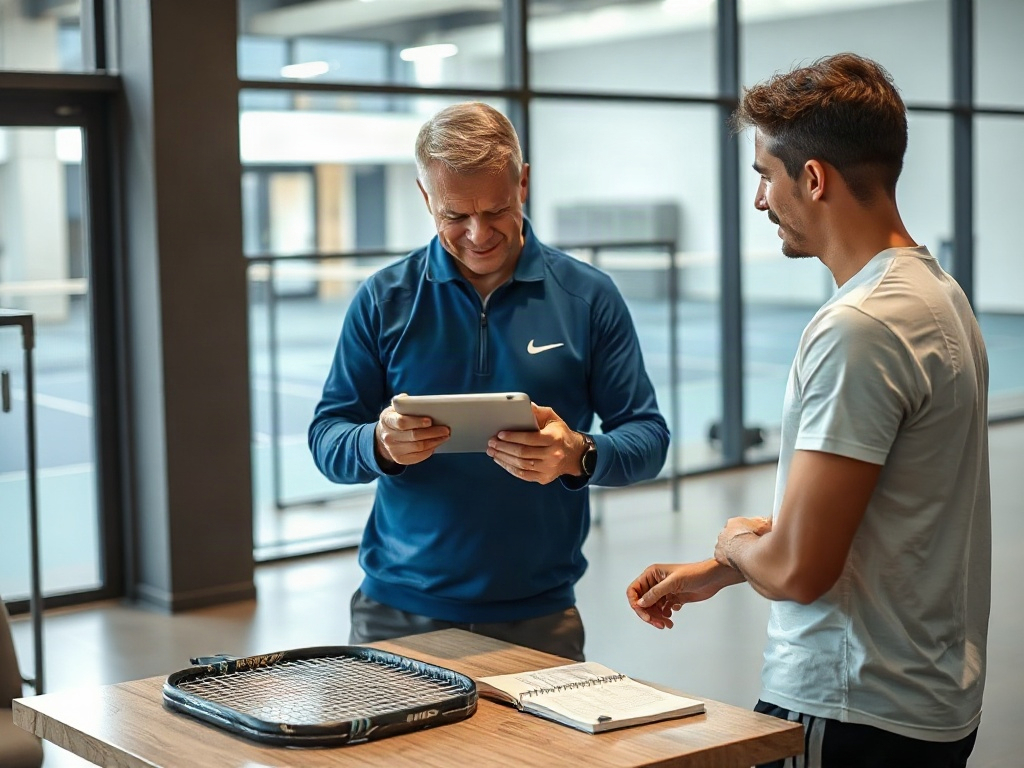

Padel looks fast in real time, but on video it reveals a completely different layer of the game. What seems like a simple missed shot often turns out to be a repeated positioning issue, a poor decision under pressure, or a pattern that keeps showing up point after point. A good match review is not about watching every rally passively; it is about identifying the habits that shape momentum, control, and scoring chances. If you know what to look for, a single recording can explain why one team dominated the net, why another team kept getting pushed back, and why certain points always seemed to collapse in the same way. That is where structured analysis becomes valuable, because it turns footage into evidence instead of opinion. Once you start tracking the right patterns, the match begins to tell a much clearer story.
The most useful video analysis is specific, repeatable, and practical. Rather than trying to judge every detail at once, the smarter approach is to focus on a small set of match patterns that influence almost every rally. Those patterns include shot selection, positioning, transitions, net control, defence, communication, and the moments where pressure changes the tone of the match. By watching through that lens, you can see not only what happened, but why it happened and how often it happened. This makes your review much more useful for training, coaching, or match preparation. In other words, the video is not just a replay tool; it is a map of recurring behaviors.
Why video analysis matters in padel

Padel is one of those sports where the same rally can look chaotic from the stands and highly structured on video. Because the game is played in doubles and involves walls, angles, and constant partner interaction, small decisions carry a lot of weight. A player may think they lost a point because of a single bad volley, when the real issue was a poor recovery step three shots earlier. Video analysis exposes those hidden layers and helps remove guesswork from performance review. It also gives players a way to compare what they intended to do with what they actually did under pressure. That gap between intention and execution is often where the biggest improvements begin.
For coaches, video makes it easier to see patterns that are difficult to catch live. For players, it creates accountability and clarity, which are both essential if improvement is the goal. Reviewing a match with purpose can highlight tactical habits, emotional reactions, and decision-making trends that are easy to miss in the moment. It can also show whether a team’s structure holds up against different opponents, or whether the same vulnerabilities appear again and again. When done well, the analysis becomes a feedback loop that improves future training sessions. The key is knowing what to track so the review does not become random or overwhelming.
What to prepare before you start reviewing
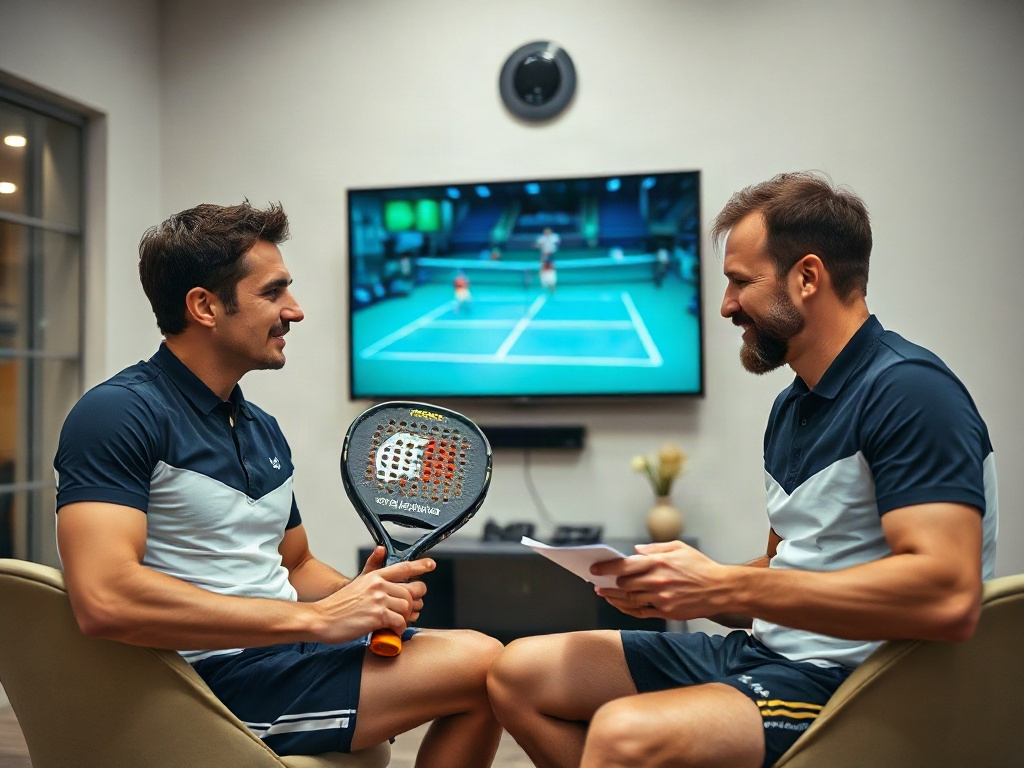
A useful review begins before you press play. You need a recording that is clear enough to follow the rally patterns, a device that lets you pause and rewind easily, and a simple note-taking system that keeps your observations organized. If you try to analyse without preparation, you will likely end up remembering isolated moments instead of reliable trends. It also helps to decide in advance whether you are reviewing one player, one pair, or the full tactical structure of the match. That choice shapes what you pay attention to during the session. A focused review always produces better insights than an unfocused one.
Many players make the mistake of watching with no framework and then wondering why the footage feels messy. The answer is usually that the eye is being pulled in too many directions at once. A cleaner method is to choose a few areas of focus and record every recurring example you see. You can use timestamps, shorthand labels, or even a basic checklist to make the process faster. If you revisit the same recording later, your notes should help you compare patterns rather than start from scratch. Good preparation saves time and makes the analysis much more actionable.
You do not need expensive software to do meaningful analysis, but a few basic tools will make the process much smoother. Slow-motion playback helps you catch movement before and after the strike, while timestamps make it easy to return to key moments. A notebook or spreadsheet can help you separate tactical issues from technical ones. If you want a more structured approach, you can also create categories for serve returns, transition errors, net losses, and defensive resets. The goal is not to overcomplicate the process, but to make the review consistent enough that the patterns stand out. Once that happens, the footage becomes much easier to interpret.
Track shot selection patterns
Shot selection is one of the clearest windows into a player’s tactical awareness. It shows whether a player understands the game situation, respects the risk level of the moment, and chooses options that support long-term control rather than short-term relief. Some players repeat the same shot under pressure because it feels safe, while others force low-percentage options when patience would be better. On video, these habits become easy to spot. Over time, the same choices usually reveal whether a team is building points intelligently or reacting impulsively. That makes shot selection a core category in any serious match review.
- Track whether players choose safe or aggressive shots in defensive positions.
- Note how often lobs are used to regain time or reset the point.
- Observe whether volleys are directed with purpose or played too centrally.
- Watch for repeated use of bandejas or viboras in similar court situations.
It is also worth comparing shot selection across different phases of the match. A player may choose well when fresh but become predictable once pressure builds or fatigue sets in. The same applies to teams that appear varied early in the match but narrow their options as the score tightens. By tracking shot choice over time, you can identify whether decisions change with the situation or remain stubbornly repetitive. That information is extremely useful for training, because it shows not just what shot was played, but whether the decision behind it made sense. In padel, the right shot is often more important than the hardest shot.
Analyse court positioning and spacing
Positioning is one of the strongest indicators of whether a team is in control of the point. A pair that moves together, recovers together, and keeps the correct distance between players usually forces the opponent into more difficult decisions. A pair that drifts apart, hesitates during transitions, or leaves the middle open tends to give away free opportunities. Video makes these spacing errors visible in a way that live play often does not. You can pause at the moment of contact and see exactly where each player is standing, how quickly they recover, and whether their shape supports the next shot. That kind of detail matters because padel rewards coordination more than isolated effort.
When reviewing positioning, look beyond where the players are standing and examine how they move as a unit. Good spacing is not static; it changes as the point develops, especially when one team is pushed back and then tries to recover the net. Watch for whether both partners take the same recovery line or whether one player advances while the other remains trapped deeper on court. Those asymmetries often create the gaps that stronger opponents exploit. A team that appears balanced on paper may look very different on video once movement patterns are exposed. This is why positioning analysis is one of the most revealing parts of the review.
Start by looking at depth, width, and the distance between partners after each shot. Then check whether the team adjusts correctly when defending off the back glass or when moving forward after a lob. If one player consistently gets caught out of position, that pattern will usually repeat under pressure. The most useful notes are the ones that tie movement to outcome, such as a poor recovery that leads directly to a passing shot. Over several games, these notes reveal whether the issue is communication, timing, or tactical understanding. That level of detail is exactly what makes video analysis valuable.
| Pattern to Track | What to Look For | Why It Matters |
|---|---|---|
| Shot selection | Choice of lobs, volleys, overheads, and defensive resets | Shows decision quality and tactical awareness |
| Positioning | Spacing, recovery lines, and court coverage | Reveals team structure and control of space |
| Transitions | How players move from defence to attack | Indicates whether they can regain the net efficiently |
| Net control | First volleys, overhead pressure, and net retention | Shows who dictates rally pace |
| Defence | Wall handling, lobs, and reset quality | Highlights resilience under pressure |
Review transition play from defence to attack
Transitions are often the turning point in a padel match. A team may defend well for several shots, but if it cannot convert that defence into a stable attacking position, it will keep absorbing pressure. The best teams know how to survive long enough to create one clean opportunity to move forward. On video, these sequences are especially useful because they show whether the team makes smart use of lobs, controlled resets, and recovery steps. You can often see the exact moment when momentum changes, even if it was hard to notice live. That makes transition analysis one of the most practical tools in the whole review process.
- Check which defensive shots create the chance to move forward.
- Notice whether players recover in sync after a successful lob.
- Record how often a team loses the net immediately after gaining it.
A transition should not be judged only by whether the point was won. Sometimes a transition is successful because it improves court position even if the rally continues. At other times, a team may appear to attack well but fail to lock in the net, which means the advantage is temporary. On video, these distinctions become easier to measure. If a team repeatedly loses the initiative after a defensive reset, that is a pattern worth prioritizing in training. Strong transition play is less about one spectacular shot and more about a sequence of disciplined decisions.
Examine net control and finishing efficiency
Net control is one of the defining features of high-level padel. The team that owns the net usually owns the tempo, because it can pressure opponents with volleys, overheads, and tighter angles. But gaining the net is only part of the equation. The real question is whether the team can keep it and finish points efficiently once it is there. Video analysis is ideal for this because it shows the quality of the first volley, the positioning after the volley, and whether the team stays compact enough to prevent a counterattack. A strong net game is built on both pressure and discipline.
When analysing finishing efficiency, pay attention to whether points end because of smart construction or rushed execution. Some teams force winners too early and give the opposition a way back into the rally. Others stay patient at the net, create better angles, and wait for the right opening. These differences are often subtle in real time but very obvious when you review the footage. You should also note how often a pair wins the net only to lose it again within a few strokes. That pattern usually points to weak shot selection or poor recovery after contact.
Look for first volleys that keep the opponent under pressure, overheads that are controlled rather than desperate, and closing movements that stop the other team from countering easily. Also check whether the players communicate clearly when one of them steps in to finish the point. A lot of teams gain the net but fail to use it because their spacing becomes too wide or their shot choices become too predictable. Video makes these breakdowns visible and measurable. If you want to improve net play, you need to know whether the problem is execution, timing, or collective discipline. Those are three very different issues, and footage can separate them.
Study defensive response under pressure
Defence in padel is not passive. It is a structured effort to survive pressure, regain balance, and create the next chance to attack. A well-defended point often looks simple after the fact, but during the rally it requires footwork, anticipation, and composure under stress. On video, defence can be reviewed in great detail because the sequence of contact, rebound, and recovery is easy to follow. You can see whether a player absorbs pace well, chooses a sensible reset, or panics when the ball comes off the glass. These habits tell you a great deal about match temperament and technical reliability.
The most important thing to track is whether defensive actions actually reduce pressure. A high lob, for example, may look safe but still leave the opponent in a strong attacking position if it lacks depth. A controlled block may buy time, but only if the recovery step is good enough to support the next shot. Repeated mistakes in defence often come from poor anticipation rather than poor talent, which is why video review is so useful. It allows you to separate reaction speed from decision quality. If a player is repeatedly beaten by the same kind of pressure, the solution may be tactical rather than technical.
- Watch how players handle low balls after the back glass.
- Track whether defensive lobs reach enough height and depth.
- Note if players reset points or simply return the ball under pressure.
- Check whether defensive footwork stays balanced during fast exchanges.
Identify communication and teamwork patterns
Because padel is played in pairs, communication can change the entire shape of a match. Two technically gifted players can still struggle if they hesitate on middle balls, fail to call shots clearly, or move without synchrony. Video is one of the best ways to study teamwork because it shows not only what was said, but what the players did in response to each other. You can see whether one partner consistently takes over too much space or whether both players trust the same tactical plan. The best teams often look calm and connected under pressure, even in difficult rallies. That connection is rarely accidental.
Teamwork analysis should include both verbal and non-verbal signs. Verbal cues matter, but so do hand signals, body language, and the hesitation that appears when two players are unsure who should take a ball. These details are easy to overlook live, yet they often explain avoidable errors. For example, a missed middle ball may not be about mechanics at all; it may be about uncertainty and lack of clarity. Over time, communication patterns can influence confidence as much as tactics. That is why this area deserves as much attention as shot quality or positioning.
Look for clear calls on balls between players, consistent agreement on who covers the middle, and quick responses after a mistake. Also pay attention to whether one player becomes visibly frustrated or whether the pair resets quickly after a lost point. Good teams usually recover emotionally as well as tactically. Poor communication often shows up as delayed movement, repeated overlap, or unnecessary second-guessing. These are small details, but they add up over the course of a match. If you want to understand why a team feels stable or unstable, communication is often the answer.
Look for momentum shifts and pressure responses
Matches do not usually change because of one dramatic shot. More often, they turn because of a cluster of small moments that change confidence, rhythm, or tactical sharpness. Video analysis helps identify those turning points with more precision than memory ever could. A missed break point, a long rally won after a defensive scramble, or a sudden rise in unforced errors can all trigger a visible change in the match flow. Once you start tracking these moments, you begin to understand not just how points are won, but how control is taken and lost. That understanding is extremely useful for both preparation and review.
Pressure response is especially important when the score gets tight. Some players become more conservative, some take too many risks, and others lose their structure completely. On video, you can compare how the same pair behaves at different scorelines and see whether the issue is mental, tactical, or both. You may notice that a team begins to rush the net, stop using the lob, or communicate less clearly when under pressure. These are not random behaviors; they are repeatable response patterns. The more clearly you can identify them, the easier it becomes to train the right fix.
How to turn observations into improvement
Analysis becomes valuable only when it leads to action. Once you have identified recurring patterns, the next step is to organize them into a clear improvement plan. The best approach is to group findings into categories such as technical, tactical, physical, and mental. That makes it easier to decide what should be addressed first and what can wait. Not every pattern deserves equal attention, especially if one issue is causing several others. A focused plan turns video notes into progress rather than just commentary.
It also helps to translate each observation into a training objective. If the problem is weak recovery after a lob, the solution might be specific movement work. If the issue is poor net retention, the training block might focus on first volley quality and spacing. If communication is the main concern, partner drills and scripted point patterns can help. The key is to move from diagnosis to practice without losing the detail that made the diagnosis useful. A good review should end with a short list of priorities that can actually be trained. That is how video analysis becomes a performance tool instead of a passive exercise.
- Group the main issues by technical, tactical, physical, and mental categories.
- Choose the most frequent pattern first, not the most dramatic one.
- Turn each issue into a measurable training goal.
- Revisit the same match later to check whether the pattern is still present.
Итог
Analysing a padel match video is most effective when you treat it as a search for patterns, not a replay of highlights. Shot selection, positioning, transitions, net control, defence, teamwork, and momentum shifts all reveal how a match is truly being played. When you track those areas consistently, the footage becomes more than a record of what happened; it becomes a guide to what should happen next time. That shift in perspective is what makes video review so powerful. It helps players and coaches move from general impressions to concrete evidence. And once the evidence is clear, improvement becomes much more targeted.
The best reviews are simple enough to repeat and detailed enough to matter. You do not need to analyse everything at once, but you do need a framework that keeps your attention on the right moments. A structured approach ensures that you notice not only the obvious errors, but also the habits that quietly shape outcomes. Over time, this kind of review can sharpen decision-making, improve team coordination, and make training more efficient. If you use video with purpose, every match becomes a lesson. That is the real value of analysis in padel.
Часто задаваемые вопросы
- How long should I watch a padel match video for analysis?
Even a single set can reveal useful patterns if you review it carefully and take structured notes. Full-match analysis gives more context, but shorter sessions can still produce clear insights. - What should I track first when analysing a padel match?
Court positioning is often the best starting point because it affects both attack and defence throughout the match. Once that is clear, shot selection and transitions usually become easier to interpret. - Do I need special software to analyse a padel match video?
No, basic playback tools are enough to begin. Slow motion, pause, rewind, and timestamp notes will already give you a strong foundation for effective review. - How many patterns should I focus on in one review?
Start with a small set of key patterns so the analysis stays clear and manageable. If you try to track too many areas at once, the review can become unfocused and less useful. - Can beginners benefit from video analysis?
Yes, beginners can learn a lot from watching their own matches. Video helps them see positioning mistakes, poor shot choices, and simple communication issues much more clearly than memory alone.